

A. Armonaitė to EU ministers: We must involve Ukraine in “Rail Baltica” development
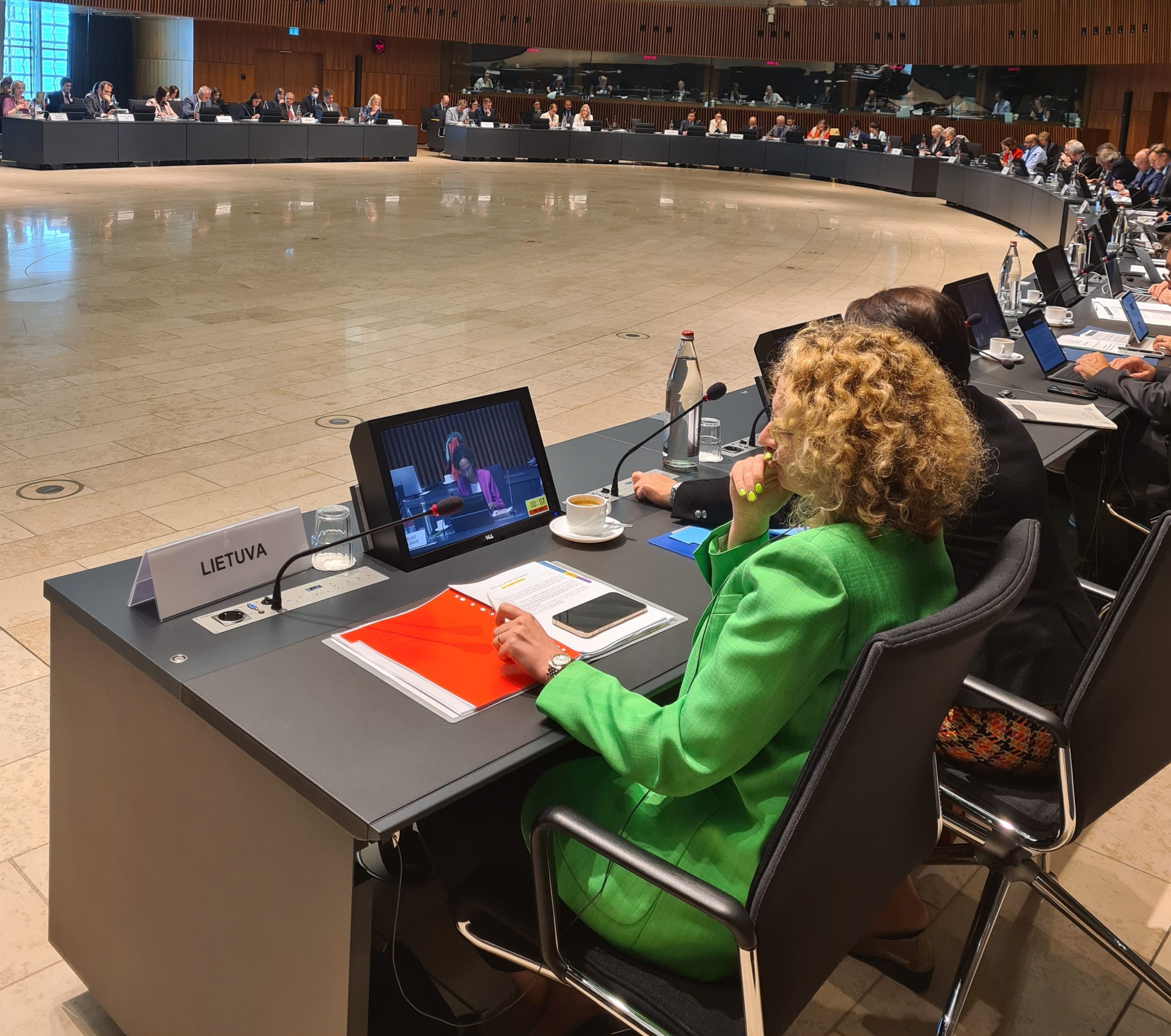
Minister of the Economy and Innovation Aušrinė Armonaitė attends a meeting of the Competitiveness Council of the European Union in Luxembourg . According to the Minister, the main focus today must be on restoring and consolidating disrupted supply chains in Ukraine . This requires the extension of the project “Rail Baltica” and the commitment to build a Western-style rail track to Ukraine .
“Today, as Ukraine struggles for the freedom of each of us, we must be determined to take responsibility for Ukraine’s future, for the country’s systematic and successful integration into the Common Economic Space. Lithuania has secured this through its logistics, energy and financial sectors. That was Lithuania's way, and it must be Ukraine’s too. The continuation of the project “Rail Baltica” to Ukraine must become an essential part of this integration”, says she.
According to the Minister, we could now re-establish supply chains if Ukraine’s railways operated on Western tracks, the impact of port blockades could be reduced, and the diversification of logistics would prevent Russia from exerting such level of pressure on the Ukrainian economy.
At the Competitiveness Council, EU Ministers are also focusing on strengthening the resilience of Europe’s strategic industrial ecosystems. A. Armonaitė noted that the industrial sovereignty of Europe is vital: Lithuania has already taken an important step away from Russian gas, oil and electricity imports, and the rest of Europe should follow this lead.
EU ministers are also discussing the European Chips Act, which aims to reduce the dependence of EU Member States on supplies of chips from third countries.
“The initiative is promising and can be a powerful tool to harness the potential of each Member State. The demand for chips will only grow over time and we need to build new capacities of design, manufacturing, assembly and packaging of chips in Europe. Lithuania can join to the development of a thriving EU semiconductor ecosystem. We have companies capable of creating the full chain of chip production, combined with strong research capabilities,” says A. Armonaitė.
EU aims to double the Community’s share of the semiconductor market from 10% to 20% by 2030, with the intention of mobilising more than EUR 43 billion of public and private investment for this purpose. The manufacture of chips has become a strategic priority in Europe and the US as this component has been in high demand since the outbreak of the pandemic.
The meeting also discusses the Consumer Credit Directive, the contribution of Europe to the space programme and other issues.
Last updated: 10-06-2022
Related news:
€10 million investment for regional industrial enterprises to develop sustainable technologies
Lithuanian public procurement leaders honoured as the best companies and organisations are announced
“Spiečius” opens in Mažeikiai: a boost to regional business growth
U.S. defense technology company “Mach Industries” plans to expand in Lithuania