

A. Armonaitė: We must increase Lithuania's security by strengthening the Lithuanian defence industry
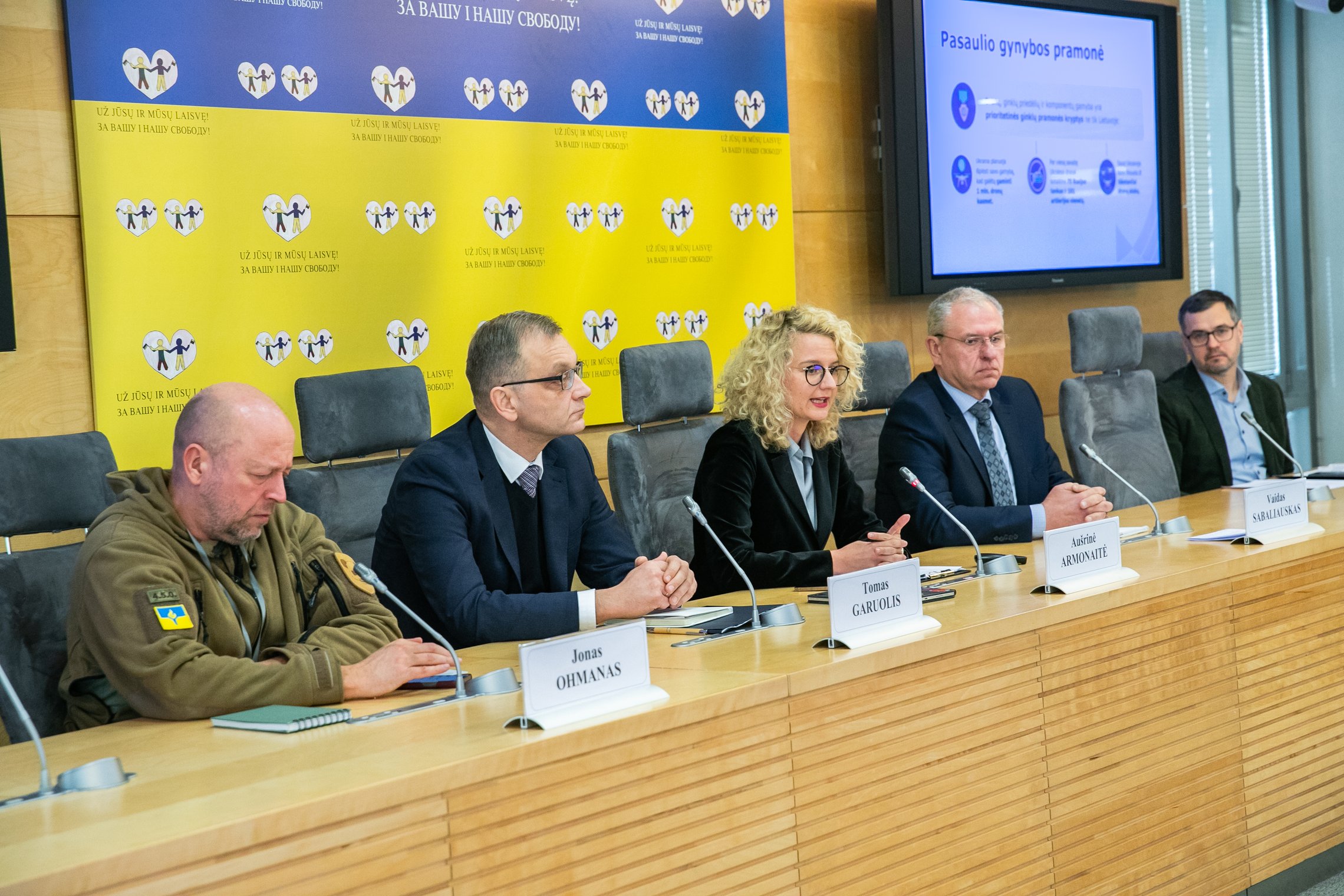
Minister of the Economy and Innovation Aušrinė Armonaitė is initiating amendments to the laws relevant to Lithuania's defence and security industry, which will remove excessive requirements for the development of this sector and create a more favourable environment for Lithuania to produce its own products for European defence.
"The security of the whole of Europe is important to us, so we must continue to reduce restrictions and ensure the growth of the defence industry in Lithuania. We need to produce as many of the necessary products as possible at home and help Ukraine, which has a shortage of weapons. The production of products in this sector in Lithuania has increased by one and a half times in recent years, and the demand for them will continue to grow. We see the potential to expand our production, but to do so we need to create a more flexible environment for companies to operate in," said the Minister of the Economy and Innovation A.Armonaitė.
The amendments to the Laws on Arms and Ammunition Control and on Public Procurement in the Field of Defence and Security would reduce restrictions on the production of weapon parts in Lithuania. This will allow Lithuanian companies to produce arms parts for foreign arms manufacturers. It would also facilitate the presentation of Lithuanian production in Europe and create more favourable conditions for the employment of workers in this sector. In addition, the amendments oblige the Ministry of Defence to carry out technical or warranty maintenance in Lithuania for defence and security products purchased from foreign suppliers for the Lithuanian armed forces.
According to A. Armonaitė, Lithuanian companies have the greatest potential for growing the defence and security industry in the production of drones, lasers, optics and other innovative weapon components and accessories.
"All business organisations agree on the need to increase defence spending. But it is not just additional taxes that would make a significant contribution to our defence. We must consistently strive to source as much of the defence industry's needs as possible in Lithuania," says Tomas Garuolis, Acting Director General of the Confederation of Lithuanian Industrialists. "When we think about our defence preparedness, we need to follow the principle of maximising the protection of soldiers' lives, and this means that the only way to win is through our technological superiority. That is why I propose that we make every effort now to gain a technological edge by developing our defence industry”.
Vaidas Sabaliauskas, Director of the Lithuanian Defence and Security Industry Association, sees these proposals as a first step in the right direction towards creating non-discriminatory conditions for the Lithuanian defence industry.
"Beyond that, we need to work towards even stronger solutions in Lithuania. The war in Ukraine has been going on for 10 years now, but our country remains the only one in the whole of the EU that prohibits companies from being involved in the circulation, development, production, repair, maintenance of category A weapons and even the supply of ammunition to Ukraine. We would like to see more state trust, as this limits the competitiveness of business. Therefore, we hope that when the draft is discussed in the Seimas, we will reach an agreement with the politicians on how to strengthen this good initiative. This is what the business community is looking forward to," said the head of the association.
The initiative to strengthen the Lithuanian defence industry is also of interest to public organisations providing assistance to Ukraine. "The formula is simple: a secure Ukraine means a secure Lithuania. We have been allies for a very long time. "Blue/Yellow has a long history of supplying Lithuanian military and dual-purpose equipment to Ukraine, which we reinforced this year with the successful Radarom campaign. But this is not enough - we need to produce many times more, we need to deliver more to Ukraine. Each targeted transfer of Lithuanian military-industrial products to Ukraine creates ten times more value than simply storing them in Lithuania. In a sense, as a country we are already in this war, so we need to react much faster and more effectively, not at the speed and scale of peacetime," says Jonas Ohmanas, head of Blue/Yellow.
To encourage the growth of the Lithuanian security and defence industry, the Seimas last year, on the initiative of the Minister A. Armonaitė, allowed these companies to operate in special economic zones. Last summer, A. Armonaitė, Foreign Minister Gabrielius Landsbergis, Defence Minister Arvydas Anušauskas and Interior Minister Agnė Bilotaitė signed the Guidelines for the Development of the Lithuanian Defence and Security Industry 2023-2027, which aim to exploit the growing potential of the Lithuanian defence and security industry.
Lithuania's defence and security sector companies are growing at twice the national average, at around 14% between 2018 and 2023, and the average salary in defence industry companies is 21% higher than the national average.
Last updated: 15-03-2024
Related news:
€10 million investment for regional industrial enterprises to develop sustainable technologies
Lithuanian public procurement leaders honoured as the best companies and organisations are announced
“Spiečius” opens in Mažeikiai: a boost to regional business growth
U.S. defense technology company “Mach Industries” plans to expand in Lithuania