

E. Grikšas: Lithuania is strengthening the resilience of its economy – measures have been drawn up to ensure business stability
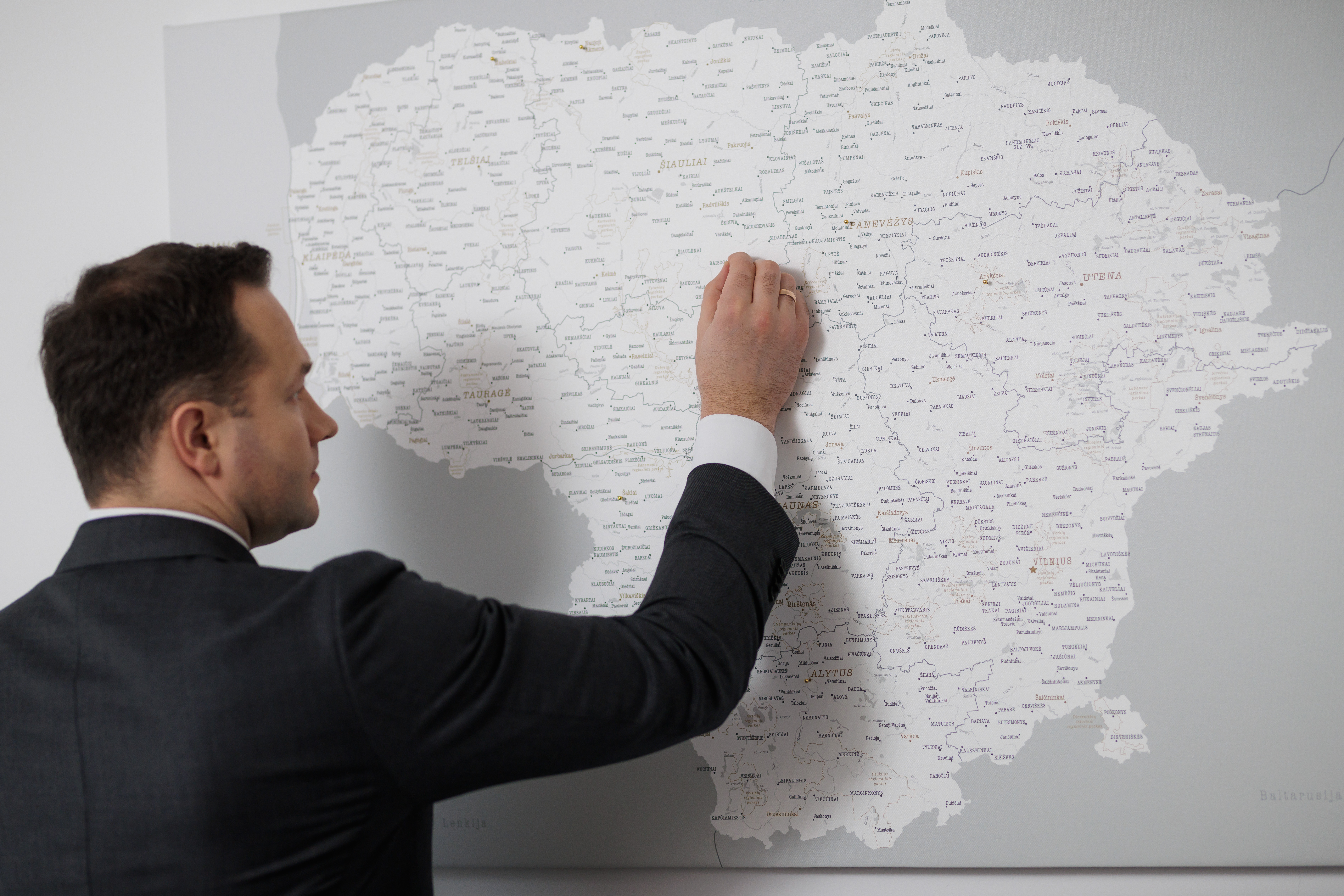
Having assessed geopolitical developments in the Middle East and the wider region over recent weeks and their potential impact on Lithuania’s economy, the Ministry of Economy and Innovation has drawn up a plan of five lines of action. Its aim is to strengthen the country’s economic resilience, ensure business stability and consistently continue the long-term economic transformation.
According to Edvinas Grikšas, Minister for the Economy and Innovation, the latest international agreements and the ceasefire between the US and Iran announced yesterday are helping to ease tensions in the region. Nevertheless, a responsible economic policy requires us to be prepared for various scenarios.
“It is essential to ensure the stable and secure operation of Lithuanian companies under any circumstances. That is why we are now purposefully strengthening the economy’s resilience, investing in long-term solutions and developing measures that will help companies adapt and grow. Our aim is not only to respond to challenges, but also to consistently build a strong, competitive and resilient economy of Lithuania,” says E. Grikšas.
In light of these circumstances, the Ministry has identified five priority actions that will help to safeguard and strengthen the economy of Lithuania.
The first line is the acceleration of strategic investments. The aim is to strengthen Lithuania’s competitiveness not only through its workforce but also through an attractive investment environment; therefore, plans are in place to create a state subsidy scheme for particularly large-scale investments.
The second line is the creation of more favourable investment conditions for projects generating high added value, which are currently not covered by existing regulations. It is planned to expand the conditions for attracting all investments that currently generate significant value.
The third line is to strengthen the innovation economy. Priority will be given to solutions in the fields of energy efficiency, alternative energy and business transformation. To this end, ‘LitAI’ – the largest artificial intelligence centre in the Baltic States – is already being established to strengthen expertise and innovation and help prepare for the next technological phase.
The fourth line is to boost productivity through R&D, digitalisation and technological modernisation. The aim is to encourage companies to invest more actively in the development of new products, process optimisation and more advanced production models. Therefore, proposals will be made to improve the model for income tax relief for R&D activities, so that it is clearer, more risk-oriented and encourages companies to innovate. However, innovation alone is not enough. For some Lithuanian companies, the biggest challenge today is not that they do not want to grow, but that they are too slow to modernise their technological base. It is therefore proposed to introduce a corporate tax relief scheme for technological modernisation. This incentive would encourage investment in automation, robotisation, digital equipment, advanced management systems and productivity-enhancing technologies. This is particularly important for the manufacturing sector and companies operating in the regions, whose competitiveness increasingly depends not on the size of the workforce, but on modern equipment and technologies. Lithuania’s competitiveness must be built not on cheaper labour, but on more modern production and higher productivity.
The fifth line is regional economic transformation. There are plans to expand the supply of free economic zones and state-reserved investment plots in the regions, to fund the development of industrial buildings where the market fails to do so, strengthen funding for municipal infrastructure and create conditions for investors to move quicker to the areas where investment is currently stalled due to a lack of ready infrastructure.
These lines of action were presented to MPs on Tuesday by Paulius Petrauskas, Deputy Minister for the Economy and Innovation.
“The crisis in the Middle East and the Near East serves as a very clear warning to Lithuania today. A warning that the global economy will become more fragmented rather than more stable in the coming years. Competitiveness without resilience no longer works today, and countries that invest in their economic backbone in good time emerge stronger after crises,” Deputy Minister P. Petrauskas noted in the Seimas.
The Ministry has also taken further action: a new ILTE direct loan scheme has been launched, with up to EUR 100 million earmarked to help businesses ensure liquidity and business continuity. It has also approached the European Commission regarding the possibility of applying temporary targeted state aid schemes so that Lithuania can respond promptly to economic shocks when necessary.
Last updated: 22-04-2026
Related news:
€10 million investment for regional industrial enterprises to develop sustainable technologies
Lithuanian public procurement leaders honoured as the best companies and organisations are announced
“Spiečius” opens in Mažeikiai: a boost to regional business growth
U.S. defense technology company “Mach Industries” plans to expand in Lithuania