

New Board of Invest Lithuania approved
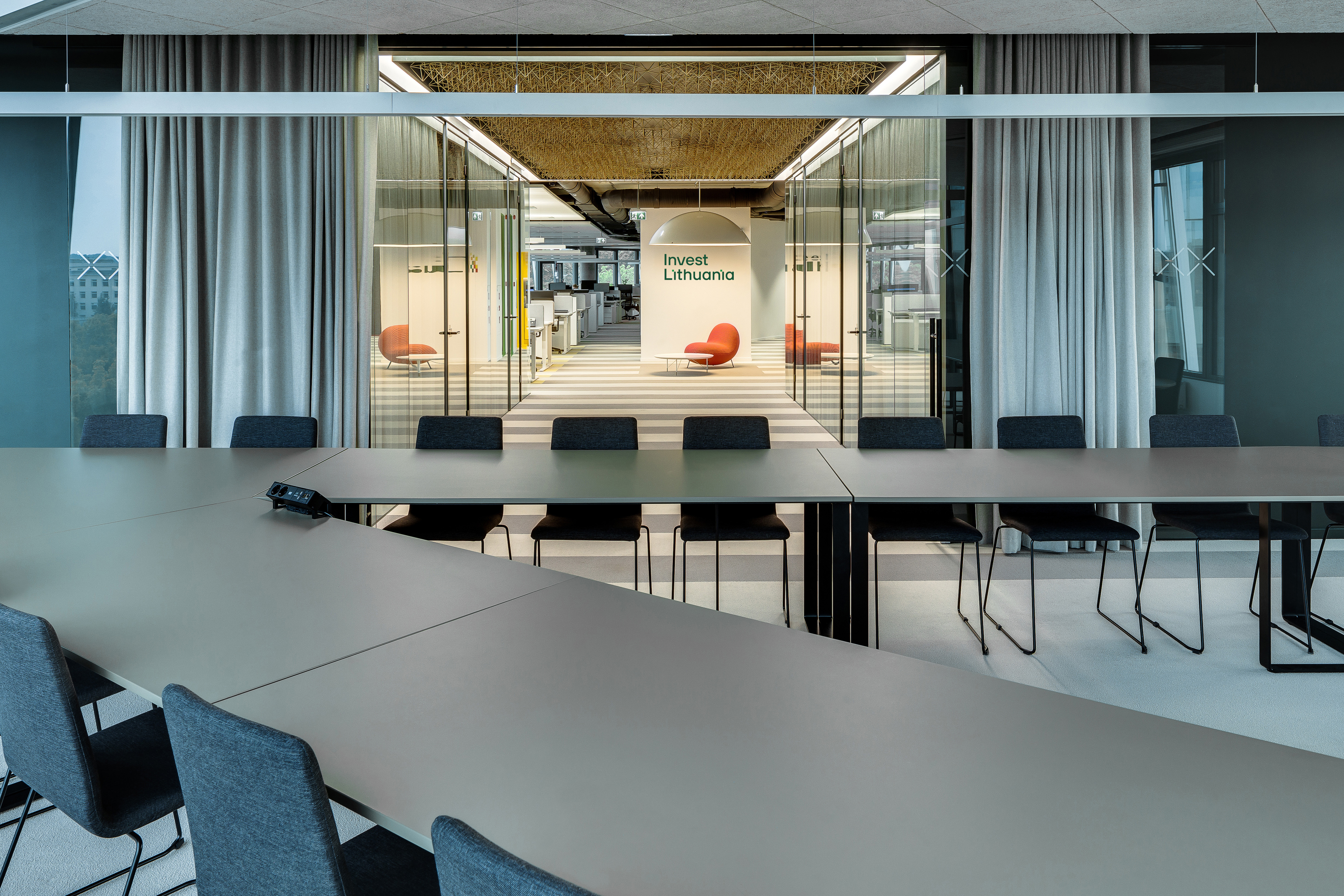
Minister of the Economy and Innovation Lukas Savickas has approved the new Board of Invest Lithuania. The move marks a new stage in the agency's activities - not only to expand its mandate, but also to set much higher goals to make Lithuania one of the most attractive investment destinations in the region.
"At the end of last year, we expanded the Agency's functions to serve major Lithuanian investors, and the Board has been given new specific requirements that will help ensure even greater efficiency. This board will contribute to strengthening Lithuania's investment environment and attracting investment. The goals are high - we want to start counting investments in Lithuania in the billions," said Minister of the Economy and Innovation L. Savickas.
The new board of Invest Lithuania consists of Indrė Genytė-Pikčienė, Chief Economist of Šiaulių bankas, Marius Ivanauskas, Chief Transformation Officer of Zurich Insurance Group, Gina Jaugielavičienė, Head of the Economic Development Group of the Ministry of Economy and Innovation (EIMIN), Professor Ieva Plikusienė, Faculty of Chemistry and Earth Sciences, Vilnius University, Julius Pranevičius, Vice Minister of Foreign Affairs, EIMIN Chancellor Eglė Radišauskienė, Kristijonas Vizbaras, Head of Business Development, Brolis Semiconductors UAB.
The Board will be responsible for the strategic direction and operational efficiency of the organisation, assessing annual plans and proposing key decisions such as the institution's business objectives, investment initiatives or management changes. It will also monitor transparency and good governance, participate in the selection of the CEO and ensure that the organisation runs smoothly and achieves its objectives.
At the end of December, Invest Lithuania's statutes were amended to give the agency a broader mandate to advise both domestic and foreign investors implementing large-scale projects. The changes will speed up investment-related processes, improve business conditions and increase the competitiveness of the Lithuanian economy. The aim is to make these reforms a key step towards the country's future sustainable development.
Last updated: 13-02-2025
Related news:
€10 million investment for regional industrial enterprises to develop sustainable technologies
Lithuanian public procurement leaders honoured as the best companies and organisations are announced
“Spiečius” opens in Mažeikiai: a boost to regional business growth
U.S. defense technology company “Mach Industries” plans to expand in Lithuania