

EIMIN: business supervisory authorities to perform their work best and worst revealed
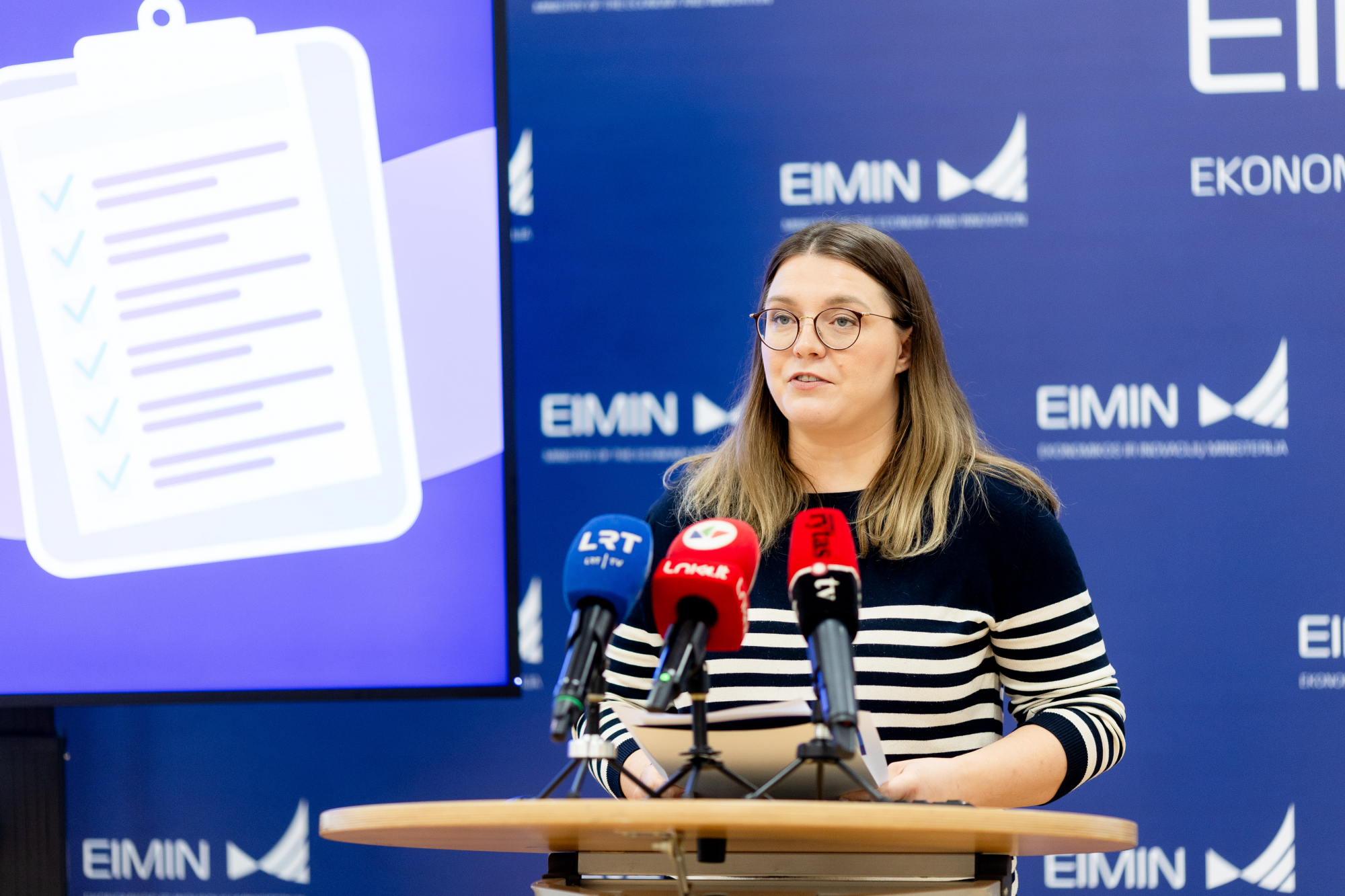
Assessment performed by the Ministry of the Economy and Innovation of all business supervisory authorities in the country shows that the work quality of most of them has improved in recent years, and that there is less focus on minor infringements and penalties. However, there are still a number of business concerns about the excessive and disproportionate burden of inspections. Effective risk assessment systems applied by the authorities would help to reduce this burden.
“The objective we set for business supervisory authorities - to advise Lithuanian businesses rather than punish them - is gradually becoming a reality. The overall level of progress of these authorities is increasing, and a quarter of them have already achieved the highest scores”, says Ieva Valeškaitė, Deputy Minister of the Economy and Innovation.
EIMIN’s biennial assessment shows where the authorities prioritise advice or punishment, whether new businesses are helped, whether inspections are carried out where the risk of harm is highest, and whether red tape is reduced.
The results showed that the overall average progress of business supervisory authorities was 7.2 out of 10, with the highest progress in the individual areas of the assessment in the categories of quality and use of checklists, organisation of inspections, and application of impact measures.
The use of checklists has become a common practice in inspections, with the vast majority (98%) of supervisory authorities using them, and 76% of authorities using checklists in all planned inspections.
In addition, inspections themselves are more likely to be planned and communicated to business in advance: 95% of authorities plan inspections through the establishment and publication of annual inspection plans, and 97% of businesses are informed in advance of a forthcoming planned inspection.
“Authorities are very active in finding new ways of presenting information that will help them to find out more quickly and better understand the applicable performance requirements. Over the past year, they have also significantly expanded the range of innovative advice tools such as mobile apps, real-time advice apps, remote advice. This shows that we are on the right track,” said Ieva Valeškaitė, Deputy Minister of the Economy and Innovation.
Telephone consultations remains the most frequently used method of seeking information (44.3% of cases). In 2022, further 4 authorities have started to record telephone consultations (29 institutions in total) and 9 authorities started to assess the quality of consultations (28 institutions in total). Thus, a total of 68% of the authorities record telephone consultations and assess their quality.
74% of supervisory authorities have at least one advisory and methodological support tool specifically targeted at helping start-ups.
The assessment of the activities of the 45 authorities shows that almost all business supervisory authorities have improved their performance. As many as 12 business supervisory authorities achieved the highest scores. The most advanced authorities are the State Tax Inspectorate (9.90 points), the Radio and Television Commission of Lithuania (9.74 points), and the State Territorial Planning and Construction Inspectorate (9.69 points).
The individual scores of the business supervisory authorities show that the most progress compared to 2020 has been made by the Public Enterprise Agency for Rural Business and Market Development (+4.55 points), the State Medicines Control Agency (+3.16 points), and Public Enterprise Transport Competence Agency (+2.68 points).
However, 16% of the authorities still have the lowest progress scores in terms of their supervisory activities, namely, the Lithuanian Bioethics Committee (4.79), the Fisheries Service (4.5), the Police Department (3.46), and the Environmental Protection Agency (3.39).
While improvements in the level of progress are evident in all categories of the scoreboard, performance improvement is still insufficient in the highly significant areas of supervisory activity. Only half of the supervisory authorities adequately measure the effectiveness of their supervisory objectives, and only one in two authorities assess the burden of inspections on business, and just over half (60%) of the authorities use the views of business (assessing feedback) to assess and improve their performance.
Risk assessment is still insufficient: only 43% of authorities carry out the majority of their inspections in the riskiest business sectors, and risk assessment is not sufficiently supported by statistical data (in cases of only 13% of authorities). 37% of supervisory authorities do not regulate the maximum duration of inspections.
The 2022 Business Supervisory Authority Scoreboard is available on the website of the Ministry of the Economy and Innovation.
Last updated: 05-07-2023
Related news:
€10 million investment for regional industrial enterprises to develop sustainable technologies
Lithuanian public procurement leaders honoured as the best companies and organisations are announced
“Spiečius” opens in Mažeikiai: a boost to regional business growth
U.S. defense technology company “Mach Industries” plans to expand in Lithuania