

Minister E. Grikšas: it is necessary to increase the availability of electrical power in Lithuania’s Free economic zones
The storms of recent weeks have once again highlighted the importance of the electricity infrastructure to Lithuania’s economy. However, problems arise not only when faced with extreme weather conditions – for several years now, businesses have been raising concerns about the availability of electricity grids, connection timelines, power reservation, and the pace of infrastructure development. The Ministry of Economy and Innovation emphasizes that this problem is particularly relevant for municipalities and the investment plots they are coordinating, as well as for Free Economic Zones (FEZs) – the lack of electricity capacity limits their development and their ability to attract new investors.
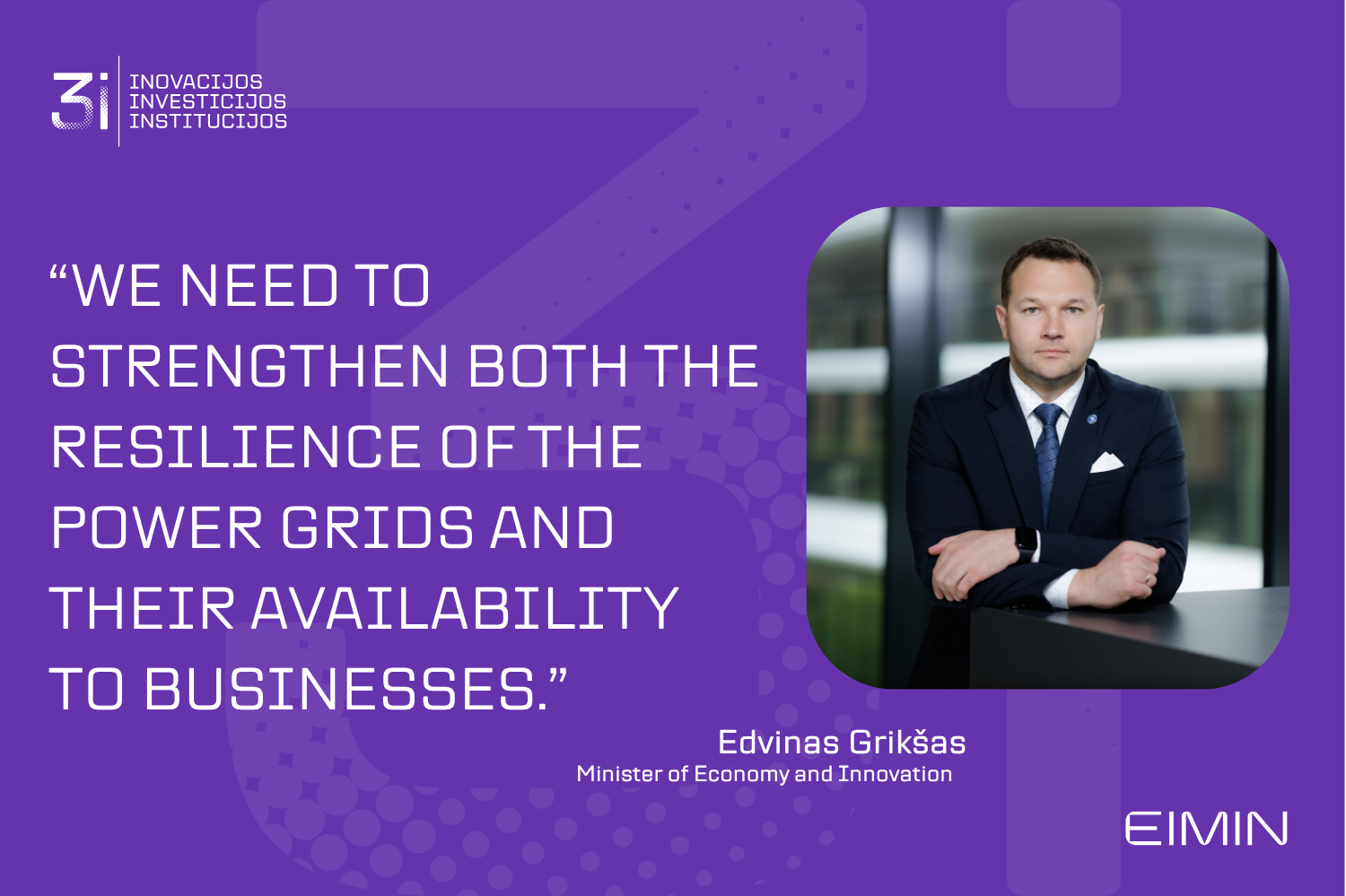
“The government invests in the economy, attracts investors, and promotes industrial development, but all of this loses its meaning if businesses cannot obtain the necessary electricity capacity in a timely manner or face lengthy and unpredictable processes. Every delayed connection means postponed or lost investments, jobs, and tax revenue for the state. We must strengthen both the resilience of the power grids and their accessibility to businesses, and the priorities of strategic infrastructure operators must align with the interests of Lithuania’s economic growth,” says Edvinas Grikšas, Minister of Economy and Innovation.
According to him, although the country produces or imports enough energy on its own, the problem arises from the capacity of local grids and transformer substations, which are often unable to meet the needs of rapidly expanding large industrial enterprises. These infrastructure constraints directly hinder the attraction of new investors and the expansion of existing factories.
The Ministry of Economy and Innovation’s priority is to ensure that Lithuanian businesses can grow, invest, and create jobs without facing unreasonable barriers to connecting to the power grid. According to Minister Edvinas Grikšas, it is essential today to set clear goals for strategic infrastructure operators and to evaluate their performance based on the extent to which their activities contribute to investment, regional development, and the creation of economic value.
Plans to establish two more Free economic zones
Minister E. Grikšas met today with representatives of the Klaipėda and Panevėžys FEZs and discussed the operating conditions, infrastructure needs, and development opportunities for the FEZs. The possibility of establishing a second free economic zone in Panevėžys was considered.
In addition, the Lithuanian FEZ network is expected to be expanded in the near future with a new industrial area in Visaginas. The new FEZ in Visaginas is planned to cover an area of approximately 223.7 hectares. The draft law on the Visaginas FEZ has been submitted to the Government for approval, and the draft is scheduled to be considered during this year’s fall session of the Seimas.
Last updated: 03-09-2026
Related news:
€10 million investment for regional industrial enterprises to develop sustainable technologies
Lithuanian public procurement leaders honoured as the best companies and organisations are announced
“Spiečius” opens in Mažeikiai: a boost to regional business growth
U.S. defense technology company “Mach Industries” plans to expand in Lithuania