

Ministers have agreed on further development of Lithuania's defence and security industry
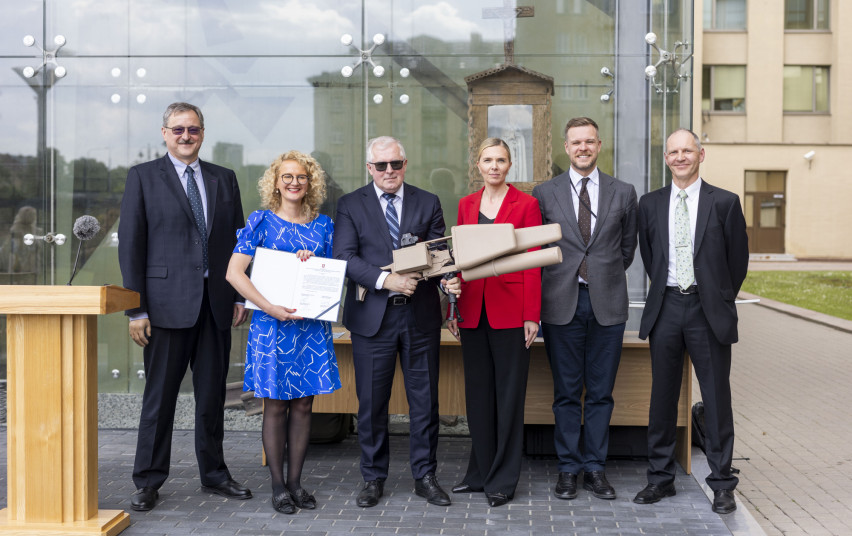
The Roadmap for the Development of Lithuania's Defence and Security Industry 2023-2027 has passed the final stage, with a joint agreement of four ministers approving an initiative to shape the needs of the defence and security industry and innovations in our country. This initiative of the Ministry of the Economy and Innovation will make a significant contribution to the possibility of exploiting the potential of Lithuania's defence and security industry, which has become particularly important since Russia started the war in Ukraine.
The Roadmap for the Development of Lithuania's Defence and Security Industry were approved by the Minister of the Economy and Innovation, Minister of Foreign Affairs, Minister of National Defence and Minister of Internal Affairs.
"Lithuania's defence and security industry is still young, but it is determined to make a major breakthrough. In order to meet the needs of national armed defence and public security, it is essential to increase the competitiveness of the defence and security industry, to promote innovation, investment and exports. I have no doubt that this initiative will help to exploit the growing potential of Lithuanian industry and will point the way to who and how must ensure the proper functioning of this system," said Aušrinė Armonaitė, Minister of the Economy and Innovation.
The Roadmap provides the legal basis for accessing new sources of funding to finance defence and dual-use product development, innovation, research, development, and experimental development, in line with Lithuania's defence and security capacity development plans.
"We are happy to have prepared the Roadmap for the Development of Lithuania's Defence and Security Industry 2023-2027, as the topic of defence and security is of particular importance in today's geopolitical context. Economic diplomacy is no exception in this respect. Lithuanian diplomats working in the field of economics in Lithuanian missions abroad are ready to provide assistance to Lithuanian defence industry companies at foreign exhibitions, meetings with defence sector associations, seeking information on opportunities to participate in foreign defence procurement, organising business missions, and seeking contacts abroad," said Minister of Foreign Affairs Gabrielius Landsbergis.
In order to implement the Five-Year Defence and Security Industry Development Plan, the Roadmap also sets out the commitments and activities of the responsible authorities. In the implementation of the Roadmap, the public authorities undertake to cooperate with associated defence and security industry organisations, research and study institutions and other interested authorities.
“The Roadmap aims to create a more favourable environment for the development of the defence and security industry and the creation of new defence products. We are interested in involving Lithuanian defence industry companies and research institutions in the supply chains of the defence and security industry in the EU and NATO countries, helping them to find partners in the EU and NATO markets, and to participate in funds, projects, and initiatives related to the development of defence industry. It is also very important that the development of the defence industry is as relevant as possible to the defence and security needs of the country and contributes to the development of the country's defence capabilities. Lithuania's defence spending has been growing steadily, a part of this spending must also be used to promote defence innovation,” said Minister of National Defence Arvydas Anušauskas.
The implementation of the Roadmap and the Action Plan would increase the international competitiveness of the Lithuanian defence and security industry, create more added value and promote exports, especially in areas of the defence and security industry, including the creation of new internationally competitive defence and security products and technologies, the development and improvement of semiconductors, lasers and optics, and the development and deployment of cyber security systems.
"The smooth cooperation between representatives of the police and the defence industry at an expert level is encouraging, as so far we have always been able to find flexible and sustainable solutions both to ensure security and to enable the smooth development of operations. Amendments to the Law on Arms Control, which entered into force on 1 April, have concentrated most of the procedures for the authorisation of exports and imports of category A weapons (as strategic goods) in a single national institution, the Ministry of the Economy and Innovation. We hope that this decision is one of the positive steps towards optimising the licensing procedures as well," said Minister of the Interior Agnė Bilotaitė.
Last updated: 26-05-2023
Related news:
€10 million investment for regional industrial enterprises to develop sustainable technologies
Lithuanian public procurement leaders honoured as the best companies and organisations are announced
“Spiečius” opens in Mažeikiai: a boost to regional business growth
U.S. defense technology company “Mach Industries” plans to expand in Lithuania