

One in six Lithuanians is starting a business, and increasingly more new businesses are being launched in the regions
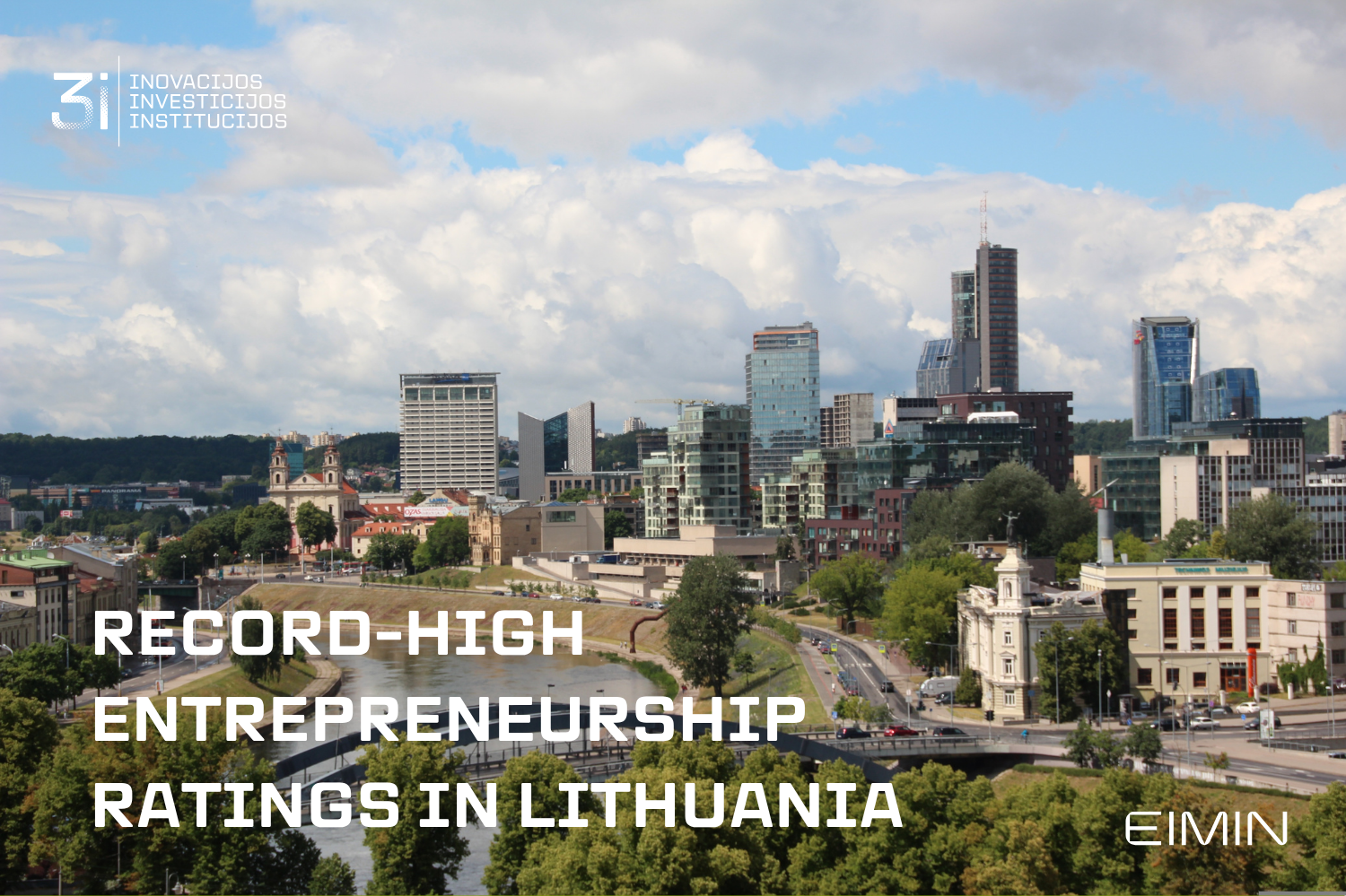
The year 2025 has been a record-breaking one for entrepreneurship in Lithuania – one in six residents is currently starting a business, and the number of people wanting to launch their own businesses has reached its highest level in the entire period under observation. Entrepreneurship is growing not only in the capital but also in other cities and regions – two-thirds of new businesses are being established outside of Vilnius.
This is shown by the recently published Global Entrepreneurship Monitor (GEM) 2025–2026 global report.
“It is important that this wave of entrepreneurship leads not only to new businesses, but – most importantly – to long-term, growing businesses that create value for Lithuania. Today, what matters is not only how many people decide to start a business, but also how many businesses reach the next stage – growing, creating jobs, and competing in international markets,” says Edvinas Grikšas, Acting Minister of Economy and Innovation.
The entrepreneurship intention index, which measures the percentage of the population planning to start a business within the next three years, reached its highest level in the entire observation period in 2025. Over the course of one year, this indicator rose from 22% to 31% among men and from 19% to 24% among women.
The percentage of people actively starting new businesses has also reached a record high – 17.4 percent of Lithuanian adults are currently taking concrete steps: registering a company, seeking customers, and developing a product. The image of the business sector is also improving – 68.2 percent of Lithuanians believe that entrepreneurs deserve respect. This is the highest result in the entire observation period.
The GEM report shows that the majority of Lithuanian businesses are young companies that have been operating for less than five years, while the share of mature business owners – those whose businesses have been operating for five years or longer – stands at 5.4 percent. This means that out of every twenty adults, only one establishes a long-term business, even though three times as many would like to do so.
The growth of entrepreneurship is becoming increasingly evident not only in the capital but also in other Lithuanian cities and regions. Two-thirds of new business founders are based outside Vilnius, and 70 percent of entrepreneurs based in the regions expect to create more than ten jobs and achieve at least 50 percent growth.
The GEM study also shows that Lithuania ranks above the EU average in all areas related to artificial intelligence (AI). Thirty percent of new entrepreneurs are already using AI tools in their businesses – a higher percentage than among established business owners (25 percent).
The weakest link in the ecosystem is the transfer of scientific knowledge to the market. Lithuanian science is strong, but the practical application of that knowledge – in the creation of products, services, or new business models – remains slow and complicated. Funding for business growth also remains a weaker part of the ecosystem – there are entrepreneurs, but there is still a lack of capital for growth.
To improve conditions for entrepreneurs, the Ministry of Economy and Innovation is implementing the “3i” strategic plan for a balanced economy, which focuses primarily on innovation, investment, and institutions. By 2030, the goal is to increase labor productivity from 70 to 90 percent of the EU average, double investment in research and experimental development (R&D) from 1.1 to 2.2 percent of GDP, and attract at least 30 percent of new investments to the regions.
The Global Entrepreneurship Monitor (GEM) is the largest global survey tracking entrepreneurship, conducted since 1999. In Lithuania, the survey is conducted by the Vilnius University School of Business. The Ministry of Economy and Innovation uses the survey data to monitor the implementation of the “2022–2030 Economic Transformation and Competitiveness Development Program.”
Last updated: 30-06-2026
Related news:
€10 million investment for regional industrial enterprises to develop sustainable technologies
Lithuanian public procurement leaders honoured as the best companies and organisations are announced
“Spiečius” opens in Mažeikiai: a boost to regional business growth
U.S. defense technology company “Mach Industries” plans to expand in Lithuania